
What are NAPLAN past papers?

Official NAPLAN test papers and answers
NAPLAN past papers are previous tests released by the Australian Curriculum, Assessment and Reporting Authority (ACARA). This page brings together the official 2012 to 2016 papers and answers for Years 3, 5, 7 and 9.
Some widely shared NAPLAN papers are from 2013, which makes them 13 years old in 2026. Even the newest paper in this collection is from 2016.
They are still useful for practising reading, writing, language conventions and numeracy. They should not be treated as a complete picture of the current online assessment or as a reliable guide to a child's current proficiency level.
NAPLAN past papers links
Choose a year level below to download official NAPLAN past papers, writing prompts and answer sheets from ACARA.
Use the PDFs to find skill gaps, then use a current online format when your child needs to practise test tools, timing or audio questions. View online NAPLAN practice tests
NAPLAN Year 3 Past Papers (2012–2016)
| Year 2016 | Reading | |
| Numeracy | ||
| Language Conventions | ||
| Writing | ||
| Answers |
| Year 2015 | Reading | |
| Numeracy | ||
| Language Conventions | ||
| Writing | ||
| Answers |
| Year 2014 | Reading | |
| Numeracy | ||
| Language Conventions | ||
| Writing | ||
| Answers |
| Year 2013 | Reading | |
| Numeracy | ||
| Language Conventions | ||
| Writing | ||
| Answers |
| Year 2012 | Reading | |
| Numeracy | ||
| Language Conventions | ||
| Writing | ||
| Answers |
NAPLAN Year 5 Past Papers (2012–2016)
| Year 2016 | Reading | |
| Numeracy | ||
| Language Conventions | ||
| Writing | ||
| Answers |
| Year 2015 | Reading | |
| Numeracy | ||
| Language Conventions | ||
| Writing | ||
| Answers |
| Year 2014 | Reading | |
| Numeracy | ||
| Language Conventions | ||
| Writing | ||
| Answers |
| Year 2013 | Reading | |
| Numeracy | ||
| Language Conventions | ||
| Writing | ||
| Answers |
| Year 2012 | Reading | |
| Numeracy | ||
| Language Conventions | ||
| Writing | ||
| Answers |
NAPLAN Year 7 Past Papers (2012–2016)
| Year 2016 | Reading | |
| Numeracy | ||
| Language Conventions | ||
| Writing | ||
| Answers |
| Year 2015 | Reading | |
| Numeracy | ||
| Language Conventions | ||
| Writing | ||
| Answers |
| Year 2014 | Reading | |
| Numeracy | ||
| Language Conventions | ||
| Writing | ||
| Answers |
| Year 2013 | Reading | |
| Numeracy | ||
| Language Conventions | ||
| Writing | ||
| Answers |
| Year 2012 | Reading | |
| Numeracy | ||
| Language Conventions | ||
| Writing | ||
| Answers |
NAPLAN Year 9 Past Papers (2012–2016)
| Year 2016 | Reading | |
| Numeracy | ||
| Language Conventions | ||
| Writing | ||
| Answers |
| Year 2015 | Reading | |
| Numeracy | ||
| Language Conventions | ||
| Writing | ||
| Answers |
| Year 2014 | Reading | |
| Numeracy | ||
| Language Conventions | ||
| Writing | ||
| Answers |
| Year 2013 | Reading | |
| Numeracy | ||
| Language Conventions | ||
| Writing | ||
| Answers |
| Year 2012 | Reading | |
| Numeracy | ||
| Language Conventions | ||
| Writing | ||
| Answers |
NAPLAN past papers in 2026
Are old NAPLAN past papers still useful?
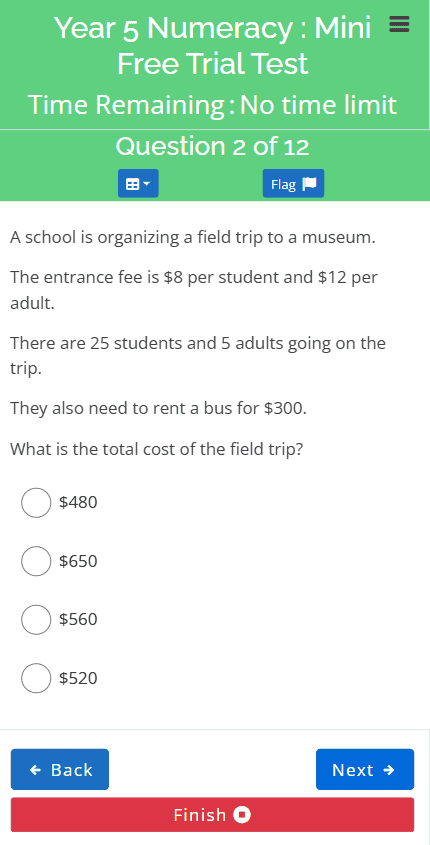
Online NAPLAN-style question
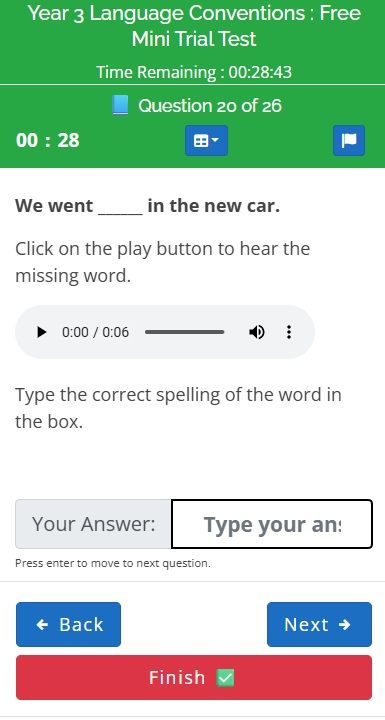
Audio spelling practice
Yes, but use them as a skill check rather than a model of the current test.
What do the latest NAPLAN results tell parents?
Recent national reporting has kept a difficult result in focus: about one in three students are in the Developing or Needs additional support levels across key literacy and numeracy areas. NAPLAN is not a pass or fail test, so it is more accurate to say these students have not yet reached the Strong or Exceeding levels.
The latest ACARA national results should prompt an honest look at how students are supported at school and at home.
The concern also reaches beyond a single test. Engineers Australia has warned that long-term numeracy performance and early disengagement from maths can affect later study and career choices.
Could reliance on old past papers leave a preparation gap?
There is no evidence that reliance on old NAPLAN past papers caused the recent gaps in national results. Classroom teaching, attendance, disadvantage, student confidence and access to support all matter.
It is still fair to ask whether home preparation based mainly on papers from 2012 to 2016 is enough. A parent may see a child answer an older PDF confidently and assume the child is ready. That paper cannot show how the child will handle the current online tools, audio items, time pressure or a tailored test pathway.
What has changed since these papers were released?
- In 2023, ACARA reset the NAPLAN measurement scales and introduced four proficiency levels. Results before 2023 cannot be compared directly with results from 2023 onwards.
- Current NAPLAN is mainly online and can use tailored test pathways. Year 3 writing is still completed on paper.
- Online tests include tools and question experiences that a static PDF cannot reproduce.
Parents can check the official NAPLAN public demonstration site to see the current test experience.
Do easy-looking questions make an old paper useless?
No. A simple question can still test fluency, and one question does not represent the difficulty of a whole paper. The problem is using an old paper as the only measure of readiness.
50, 100, 150, 200, 250, ?
Which number comes next in this sequence?- 251
- 260
- 300
- 350
PDF past papers cannot reproduce audio spelling
Current online conventions of language tests can include audio dictation items. Students listen carefully and enter the missing word. A printed paper cannot provide that experience.
Try an audio spelling question
We went ______ in the new car.
Use the play button to hear the missing word.
NAPLAN Past Papers vs Current Online Practice
The two formats serve different purposes. A balanced approach uses both.
| Official past papers PDF, 2012 to 2016 | Current online practice Modern digital format | |
|---|---|---|
| Test format | Printable PDF papers | On-screen questions and tools |
| Current NAPLAN experience | Older paper format | Can practise current digital workflows |
| Audio and online interactions | Not available in a PDF | Can be included |
| Timing | Manual timing required | Can be built in |
| Best use | Checking core skills and reviewing worked answers | Practising navigation, timing and on-screen responses |
Practical NAPLAN preparation
How to use NAPLAN past papers without relying on them too heavily
NAPLAN does not require cramming. A short, focused use of past papers can help parents and students find skills that need more attention.
1. Choose the correct year level and domain
Start with the paper for your child's year level. Use one domain at a time: reading, writing, language conventions or numeracy. This makes it easier to see a specific strength or gap.
2. Use the paper as a diagnostic check
Let your child attempt a small set without help. Mark the answers, then group mistakes by skill. For numeracy, note whether the difficulty was calculation, choosing a method, reading a graph or understanding the wording.
3. Teach the gap, then try a different question
Do not repeat the same paper until the answers are memorised. Explain the underlying skill and use a new question to check whether your child can apply it.
4. Use reading papers to build vocabulary
Discuss unfamiliar words from the reading and language conventions papers. Ask your child to explain each word in context and use it in a new sentence.
5. Practise the current online experience separately
Use the official NAPLAN demonstration site for tools and navigation. Use online practice when your child needs more work with timing, audio questions or entering answers on screen.
Quick answers about NAPLAN past papers
Are NAPLAN past papers still useful?
Yes. They are useful for practising core skills and finding gaps, but the 2012 to 2016 PDFs do not reproduce the current online test or the proficiency framework introduced in 2023.
Which NAPLAN past papers are available here?
This page links to ACARA NAPLAN test papers and answers from 2012 to 2016 for Years 3, 5, 7 and 9.
Can an old NAPLAN paper predict a current result?
No. Use an old paper to identify skills that need work, not to predict a current NAPLAN proficiency level.
NAPLAN posts
NAPLAN
Year 9 NAPLAN Persuasive Writing: Structure, Criteria and Practice
Learn how Year 9 NAPLAN persuasive writing is assessed, what markers look for, how many paragraphs you need and how to practise with instant writing feedback.
NAPLAN
How to Choose the Right Primary School in Australia
Choosing a primary school involves more than comparing NAPLAN scores or selecting the most expensive school you can afford. Location, teaching quality, school culture and the children your child spends time with can all influence the school experience.
NAPLAN
Why NAPLAN is Important for Your Child’s Future
This article explains why NAPLAN is important for Year 3, 5, 7, and 9 students. It also shows how NAPLAN helps build strong academic foundation and prepare for scholarships, selective schools, and future success.